


.png)


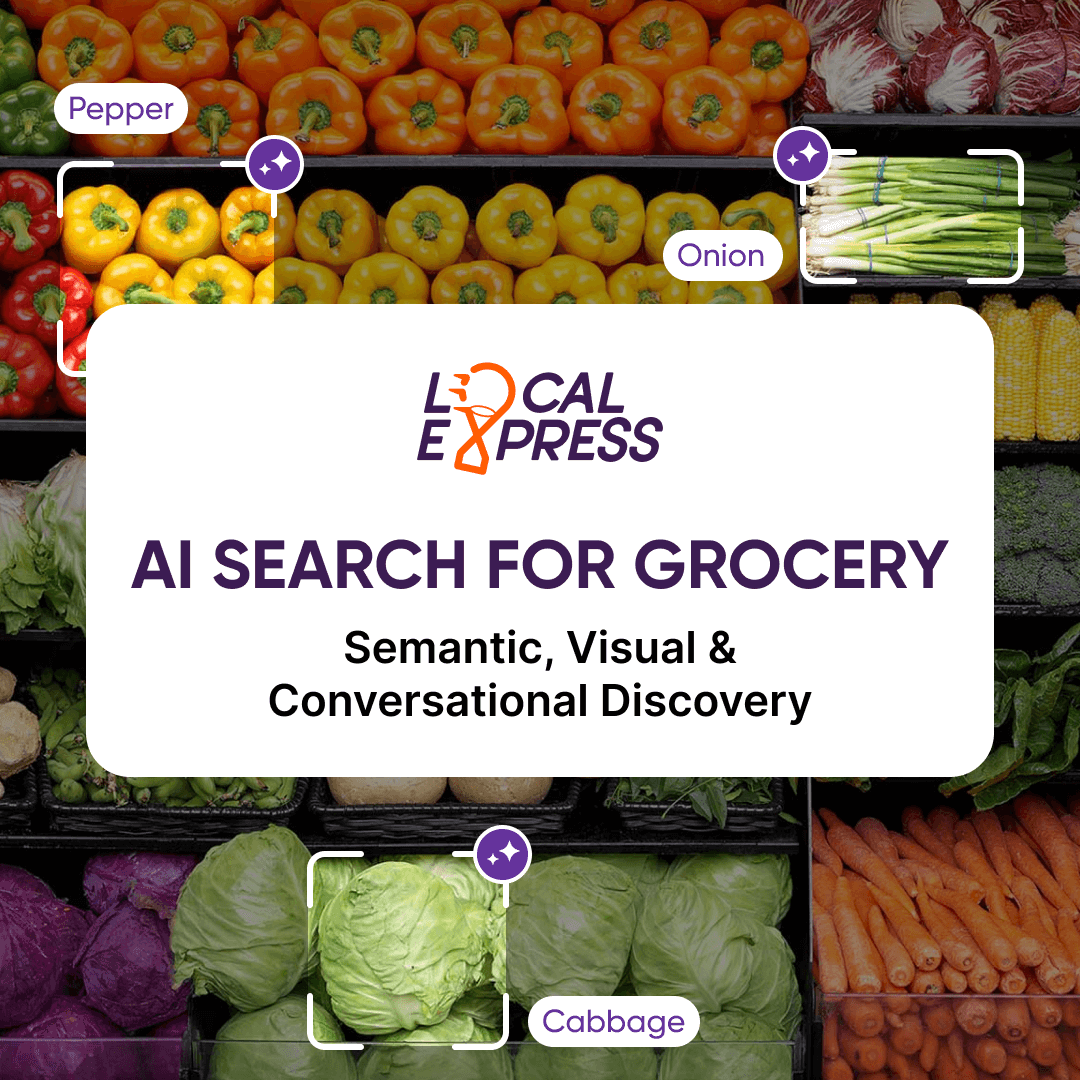



Modern grocery shoppers demand intelligent product discovery that understands intent, recognizes images, and responds conversationally. AI-powered search technologies—including semantic understanding, visual product matching, and conversational assistants—transform how customers find and purchase products across every channel.
When 69% of shoppers use search immediately upon visiting an online store, the quality of your search technology directly determines whether they add items to their cart or abandon your site for a competitor. Traditional keyword-based search fails modern shoppers who type queries like "heart-healthy dinner ideas" or "gluten-free breakfast options"—phrases that contain zero product names. AI-powered search technologies, including semantic understanding, visual product matching, and conversational assistants, are now helping grocers capture this demand. Grocers implementing these solutions report 14% increases in cart additions within weeks, while major retailers like Albertsons have deployed AI shopping assistants to dramatically reduce shopping time for routine purchases. A unified eCommerce platform that integrates these AI capabilities can transform how customers find and purchase products across every channel.
Traditional search engines match keywords. Type "pop" into a keyword-based system in the Midwest, and you'll get results. Search for "soda" in the same system, and you might find nothing—even though they're the same product. This is why semantic search has become essential for grocery retailers competing online.
Semantic search uses natural language processing to understand what customers actually mean, not just what they type. When a shopper searches for "easy weeknight meals," a semantic search engine recognizes this as an intent query and returns relevant meal kits, pre-marinated proteins, and ready-to-heat options—even though none of those products contain the words "easy weeknight meals" in their titles.
Grocers implementing semantic search see measurable results. One retailer using AI-powered search achieved a 10% improvement in search-driven cart additions during initial A/B testing, which grew to 14% after optimization.
The key difference from keyword search: semantic engines handle 63% of zero-result queries that would otherwise leave customers empty-handed. When your competitor's search shows "no results found" for "keto breakfast," yours returns eggs, avocados, and low-carb options automatically.
Not every product search starts with words. A customer sees an ingredient in a cooking video, photographs it, and wants to find it in your store. Visual search technology makes this possible.
Visual search uses image recognition and machine learning to identify products from photographs. BlinkShelf technology demonstrates this capability—scanning grocery shelves via mobile devices and automatically detecting products down to the UPC level without special hardware.
A branded mobile app provides the ideal interface for visual search integration. When customers can scan products while shopping—checking prices, reading reviews, or adding items to digital carts—the technology bridges physical and digital channels seamlessly.
The implementation path is straightforward: visual recognition SDKs integrate with existing mobile applications in 2-4 weeks, using standard smartphone cameras rather than specialized equipment.
The average grocery shopping trip can be time-consuming. Conversational AI assistants are changing that by turning search into a dialogue.
Major retailers have launched AI shopping assistants demonstrating what's now possible. These systems handle:
The result: shopping time drops dramatically for routine purchases.
Instacart's Cart Assistant offers white-label conversational AI that grocers can deploy under their own brand. The technology handles natural language queries, understands dietary restrictions, and provides personalized assistance across the shopping journey.
Deploying semantic, visual, and conversational search as separate tools creates fragmentation. Customers expect consistent experiences whether they're on your website, mobile app, or in-store kiosk.
Omnichannel solutions centralize AI search capabilities in a single platform. This means:
Platform fragmentation creates hidden costs. When your mobile app uses one search vendor, your website uses another, and your kiosks have their own system, you're paying for three implementations, three maintenance contracts, and three sets of integrations.
A unified approach enables real-time POS synchronization across channels—ensuring customers never search for items that are out of stock and always see accurate pricing.
AI search is only as good as the data it works with. Clean, enriched product catalogs form the foundation for effective semantic understanding.
Most grocery catalogs suffer from incomplete attributes. Products lack dietary tags, descriptions are sparse, and images are missing. When a customer searches "gluten-free snacks," semantic search can only return products that have been properly tagged—regardless of how sophisticated the AI model is.
The ROI is substantial. One grocer using AI data enrichment saved over 10,000 hours of manual data entry, achieved 30% improvement in product search accuracy, and saw a 48% increase in online orders.
Without clean data, even the best semantic search engine will fail. Investing in catalog quality before implementing AI search ensures you maximize returns from the technology.
Generic search results ignore what makes each customer unique. AI-powered personalization tailors product discovery to individual preferences, purchase history, and browsing behavior.
Personalization in ecommerce drives measurable results:
These improvements compound over time as AI models learn individual preferences.
Effective personalization requires data infrastructure. Self-ordering kiosks that collect customer preferences, mobile apps that track browsing behavior, and POS systems that record purchase history all feed the AI models that power personalized search.
When a returning customer types "breakfast," personalized search knows to prioritize their usual oatmeal brand, the gluten-free options they've purchased before, and the new products that match their dietary profile.
AI search capabilities extend beyond customer-facing applications. The same technology that helps shoppers find products helps your operations team manage inventory more effectively.
Inventory management solutions powered by AI enable:
When search results show out-of-stock items, customers abandon carts. When substitutions are poorly chosen, satisfaction drops. AI-powered inventory integration ensures search results reflect reality, and intelligent substitution algorithms recommend appropriate alternatives when items are unavailable.
This integration also supports order processing—pickers using AI-optimized routes find products faster because the same search intelligence that helps customers also guides warehouse operations.
The product discovery journey doesn't end at checkout. AI search intelligence extends into fulfillment, ensuring items move efficiently from shelf to customer.
AI-powered order management uses store mapping and intelligent routing to accelerate fulfillment by up to 50%. When search understands product attributes deeply, it can also:
Last-mile delivery management completes the loop. AI-powered routing can reduce delivery costs by up to 30%, and integration with 100+ delivery networks ensures customers receive their orders on time.
The connection matters: when search, inventory, and fulfillment share the same AI infrastructure, the entire operation becomes more efficient.
LocalExpress brings AI-powered search and product discovery capabilities together in a unified commerce platform purpose-built for food retailers. Rather than piecing together separate vendors for semantic search, visual recognition, and conversational AI, grocers can deploy integrated solutions from a single provider.
The platform's AI Grocery Data Fusion module addresses the foundation of effective search—clean, enriched product data. By automatically harmonizing information from POS systems, distributors, and suppliers, it creates the attribute-rich catalog that semantic search requires.
LocalExpress offers 24/7 technical support, implementation in 4-8 weeks, and full brand customization—your website, mobile app, and kiosks display your identity, not a third-party platform. For grocers ready to compete with big retailers on search experience, the unified approach eliminates integration complexity while delivering enterprise-grade AI capabilities.
Semantic search understands intent beyond keywords. When a customer searches "heart-healthy dinner ideas," it recognizes the dietary intent and returns low-sodium proteins, whole grains, and appropriate side dishes—even though none of those products contain the exact search phrase. This eliminates frustrating "no results found" pages that drive customers to competitors.
Yes. Modern visual search technology uses image recognition trained on millions of product images. Customers can photograph items from recipes, social media, or other stores, and the system identifies matching or similar products in your catalog. The technology works with standard smartphone cameras without specialized hardware.
Conversational AI serves as a personal shopping assistant that handles meal planning, dietary restrictions, and cart building through natural dialogue. These assistants understand context, remember preferences, and can execute complex tasks like "plan five dinners under $75 using ingredients I already have," dramatically reducing shopping time for routine purchases.
Major AI search platforms maintain SOC 2 Type II certification, GDPR compliance, and industry-standard encryption. Data is encrypted in transit (TLS 1.2+) and at rest (AES-256). Enterprise platforms offer regional data residency options, allowing grocers to keep customer data within specific geographic boundaries.


