


.png)


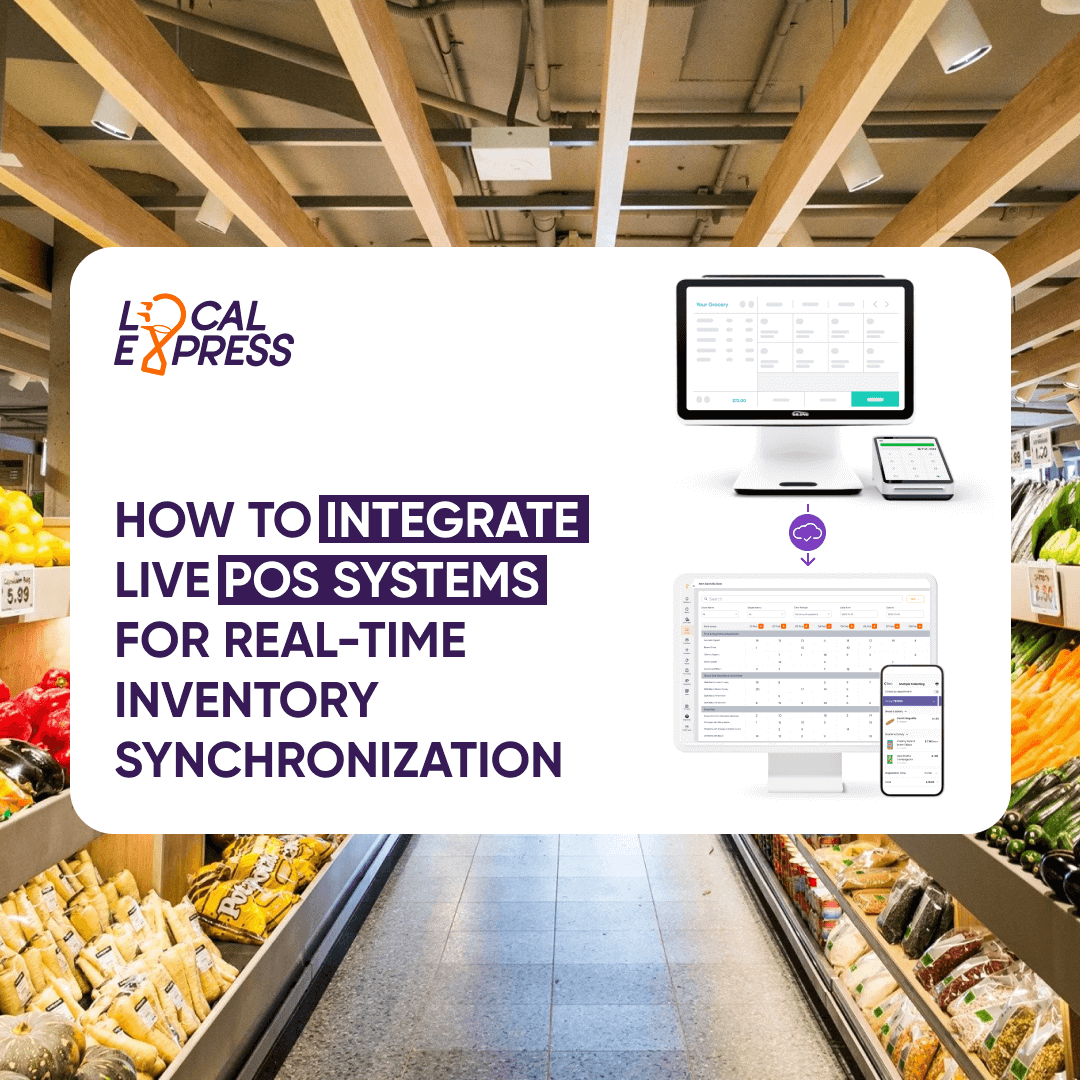



Connecting point-of-sale systems with inventory management platforms creates unified data flow across every sales channel, preventing the overselling and stockouts that damage customer trust. AI-powered integration solutions enable grocery retailers to synchronize inventory in real-time, reduce food waste, and transform disconnected operations into cohesive commerce engines that compete effectively with national chains.
Every stockout costs grocery retailers far more than a single lost sale—it erodes customer trust and sends shoppers straight to competitors. With 25% of grocery shopping now happening online, grocers who fail to synchronize their point-of-sale systems with inventory management face mounting losses from overselling, spoilage, and missed opportunities. Modern AI-powered POS integration can boost inventory accuracy to 95%, compared to the industry reality where 58% of retailers have below 80% accuracy. These systems can cut food waste by up to 25% and deliver measurable ROI within 12 months—transforming disconnected retail operations into unified commerce engines.
A point-of-sale system serves as far more than a digital cash register. Modern retail POS platforms function as the central nervous system of grocery operations, processing transactions while simultaneously managing customer data, tracking sales patterns, and triggering inventory updates across every connected channel.
For grocers managing perishables, the stakes are higher than general retail. A produce department requires weight-based pricing integration with certified scales. Deli counters need a lot of tracking for food safety compliance. Prepared foods demand kitchen display connectivity. The right POS foundation makes all of this possible through seamless system connections.
The gap between basic transaction processing and unified commerce determines whether grocers compete effectively with big retailers or struggle to keep pace. A comprehensive POS system transforms isolated data silos into actionable business intelligence.
When your POS connects inventory, e-commerce, fulfillment, and customer data into a single platform, operational visibility changes fundamentally. Managers can identify which products drive margin versus volume, which time slots need additional staffing, and which promotions actually move inventory versus those that cannibalize full-price sales.
Grocers with integrated systems often achieve higher average transaction values through intelligent upselling and loyalty program activation. The unified dashboard approach eliminates the spreadsheet chaos that plagues disconnected operations.
Not all grocery POS platforms deliver equal value. When evaluating options, prioritize:
Grocers who invest in platforms with self-ordering kiosk integration gain additional checkout lanes without additional labor costs—a critical advantage given ongoing staffing challenges.
Inventory management systems track every product from receiving dock to customer basket. For grocers, effective stock control directly impacts profitability through waste reduction, shrinkage prevention, and optimal ordering.
Without systematic inventory control, grocers lose money in every direction—overstocking ties up cash while understocking drives customers to competitors. Industry data reveals that proper inventory systems reduce counting time by 50% compared to manual methods.
The difference between batch updates and real-time synchronization separates thriving grocers from struggling ones. When a customer purchases the last case of sparkling water in-store, that information must instantly reflect across your e-commerce site, mobile app, and marketplace listings.
Real-time inventory synchronization prevents the scenarios that damage customer relationships:
Modern AI-powered inventory solutions eliminate these gaps by maintaining real-time accuracy across all touchpoints. The technology ensures that inventory deductions happen within seconds of sale completion, not hours or days later.
Consider the BOPIS (Buy Online, Pick Up In Store) scenario. A customer orders organic cilantro for curbside pickup. Without real-time sync, that cilantro might sell in-store before the picker reaches the produce section—resulting in substitutions, refunds, or angry customers.
With proper synchronization, the system immediately reserves the ordered item, preventing in-store sale until the online order is fulfilled or cancelled. Grocers implementing this approach report dramatically reduced oversell incidents compared to operations with delayed synchronization.
Integration success depends on proper planning, compatible systems, and realistic timelines. The technical work involves API connections, data mapping, and workflow configuration—but the business impact makes the investment worthwhile.
Most modern platforms support integration through:
The order management capabilities of unified platforms handle the complexity behind the scenes, allowing staff to focus on customers rather than data entry.
Follow this implementation sequence to minimize disruption:
Many technology projects experience challenges due to inadequate planning. Phased rollouts with pilot locations dramatically reduce risk compared to simultaneous multi-store deployments.
The ROI from integrated inventory management compounds across multiple operational areas. Grocers who connect their systems see measurable improvements in cost reduction, waste elimination, and revenue capture.
Quantifiable benefits from proper integration include:
Multi-location grocery chains implementing real-time POS integration typically see significant stockout reductions, recovering substantial monthly revenue in previously lost sales.
Manual processes create bottlenecks that technology eliminates. Automated capabilities include:
The prepared food operations of modern grocery stores particularly benefit from automation, matching production to demand and reducing end-of-day waste.
Artificial intelligence transforms inventory management from reactive to predictive. Rather than responding to stockouts after they occur, AI-powered systems anticipate demand patterns and adjust inventory positions proactively.
AI capabilities in modern grocery platforms include:
These capabilities deliver predictive stock analysis that keeps shelves full without overcommitting capital to slow-moving inventory.
The value of AI becomes tangible through specific operational improvements:
Grocers using AI-driven inventory report average savings around $36,320 annually per location—a return that compounds across multi-store operations.
Specialty departments within grocery operations require tailored solutions. Bakeries, butcher counters, and delis face unique inventory challenges that generic retail POS systems cannot address.
Bakery operations benefit from:
Butcher shop functionality requires:
These specialty integrations ensure that high-margin departments operate with the same precision as center-store grocery aisles.
Mobile technology extends inventory management beyond fixed terminals. Staff equipped with smartphones or tablets can perform counts, receive shipments, and adjust stock from anywhere in the store.
Mobile applications enable:
Barcode scanners and Zebra device support ensure compatibility with existing hardware investments while enabling faster checkout experiences through mobile payment acceptance.
Mobile accuracy improvements come from:
Staff productivity increases when inventory tasks can happen throughout shifts rather than requiring dedicated counting sessions after hours.
For grocers seeking to connect their physical stores with digital channels while maintaining brand identity, LocalExpress offers a comprehensive AI-powered unified platform purpose-built for food retail.
Unlike generic e-commerce solutions, LocalExpress addresses the specific complexities grocers face:
The platform is implemented in 4-8 weeks with dedicated support teams handling technical configuration. Grocers maintain complete ownership of customer data while gaining enterprise-grade capabilities previously available only to big retailers.
For operations managing prepared foods, the Made-to-Order solution includes kitchen display systems and cloud printers that route orders directly to the appropriate department—whether that's the deli counter, bakery, or hot food station.
LocalExpress provides 24/7 technical support and flexible scaling for single locations through multi-store chains, making advanced inventory synchronization accessible to grocers at every growth stage.
Integration eliminates manual data entry, prevents overselling across channels, reduces food waste through expiration tracking, and provides real-time visibility into stock levels. Grocers typically see 95% inventory accuracy compared to industry averages below 80% with disconnected systems, along with labor savings from automated counts and ordering.
When a sale occurs at any touchpoint—in-store register, online checkout, mobile app, or marketplace—the system immediately deducts that item from available inventory across all channels. This prevents the scenario where online customers purchase items that have already sold in-store, eliminating refunds, cancellations, and customer frustration.
Most cloud-based inventory platforms integrate with major grocery POS systems including NCR, Toshiba, IT Retail, and others through native connectors or API endpoints. Platforms like LocalExpress offer one-click synchronization with leading POS providers, handling data mapping and field harmonization automatically.
Implementation timelines range from 48 hours for straightforward setups to 2-4 weeks for complex multi-location deployments. Factors affecting timeline include SKU count, number of integrations required, data cleanliness, and staff training needs. Vendor-assisted implementations typically complete faster than self-directed projects.
AI enables predictive demand forecasting, automatic reorder point adjustments, intelligent product substitutions, and anomaly detection for shrinkage prevention. These capabilities shift inventory management from reactive (responding to stockouts) to proactive (preventing them), delivering 164% average ROI through improved accuracy and reduced waste."


