


.png)


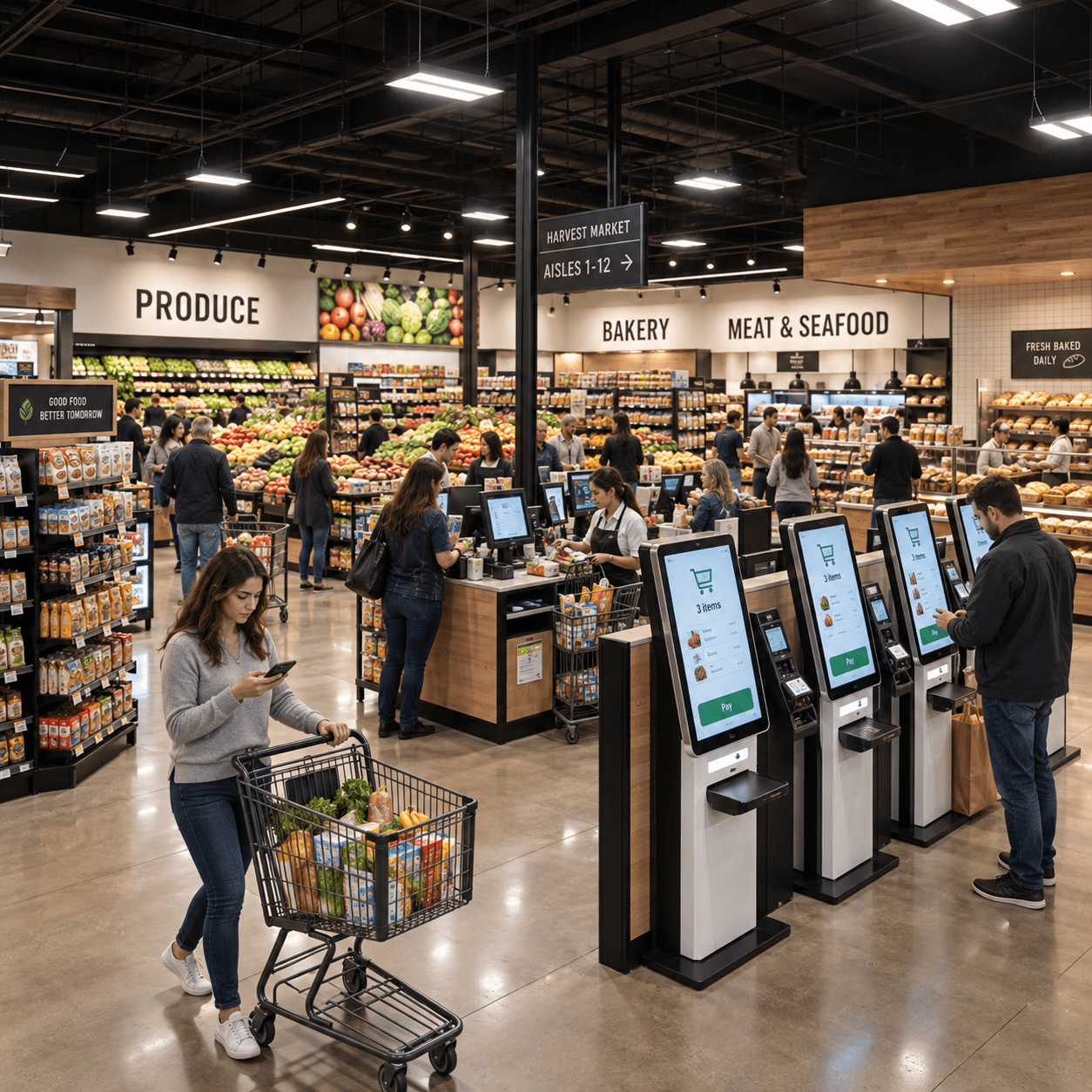



Grocery retailers face a critical challenge: disconnected systems that create inventory blind spots, inconsistent customer experiences, and operational inefficiencies costing thousands monthly in food waste and lost sales. AI-powered unified platforms now enable grocers to connect POS, e-commerce, fulfillment, and delivery systems—with Local Express reporting up to 50% faster processing, estimated 15-49% waste reduction, and measurable ROI within 30-90 days. With a comprehensive grocery platform that unifies these capabilities, grocers can compete effectively against big retailers without enterprise-level budgets or IT teams.
In the U.S., online grocery spending reached about 19% of weekly grocery spending in December 2025—highlighting how quickly digital demand can shift. The financial stakes are substantial: AI applications in grocery retail are projected to deliver $136 billion in value by 2030.
The pressure to digitize isn't just about e-commerce—it's about connecting every system (POS, inventory, customer data, fulfillment, delivery) into a unified platform. Fragmented systems create costly problems:
Research shows that 53% of retailers cite cost as their primary AI adoption barrier, while 50% have unrealistic expectations about implementation speed.
Today's platforms integrate multiple capabilities through omnichannel ecommerce solutions:
Poor product data is the silent killer of grocery e-commerce success. When POS exports contain cryptic names like "PROD123" instead of "Organic Whole Milk 1 Gallon," AI systems cannot deliver personalization or accurate search results. AI data fusion technology solves this foundational problem.
AI data fusion platforms automatically:
This process saves thousands of hours compared to manual data entry while creating the clean data foundation that enables every other AI capability to function effectively.
Effective data fusion requires live POS integration that synchronizes inventory in real-time. Key integration capabilities include:
According to research on AI-POS integration, platforms with pre-built connectors require minimal setup time with no custom coding.
Clean, unified data enables advanced analytics that transform decision-making:
According to industry research, grocers with unified data platforms achieve significantly better outcomes in inventory management, customer retention, and operational efficiency.
Generic shopping experiences no longer satisfy customers accustomed to Amazon-level personalization. AI enables grocers to deliver individually tailored experiences at scale—increasing basket sizes and building loyalty.
Modern personalization engines analyze multiple data points:
Research shows that 46% of shoppers want recommendations based on cart contents, while 58% want proactive restock alerts for regularly purchased items.
The business impact is substantial. Studies indicate that effective personalization delivers 10-25% increases in return on ad spend. Key capabilities include:
Instacart's recent Smart Shop technology demonstrates the industry direction: AI systems managing 17 million+ unique items with 30+ Health Tags and conversational shopping assistants.
Labor is one of the largest operating costs in grocery, and manual processes create bottlenecks that limit growth. AI automation addresses both challenges—reducing costs while increasing capacity.
Automation opportunities exist throughout grocery operations:
Demand Forecasting
AI analyzes historical sales, weather patterns, local events, and seasonal factors to predict demand with 20-50% fewer errors than manual methods, translating to:
Inventory Management
AI-powered inventory management solutions provide:
Research indicates that effective AI inventory management can reduce inventory levels by 20-30% while decreasing lost sales by up to 65%.
Staff productivity gains from AI automation include:
AI-powered order management transforms fulfillment operations through multi-order batching, zone-based collection, AI store mapping, smart substitutions, and QR code validation.
Customer expectations have shifted permanently. Shoppers want convenience, speed, and control—whether shopping online, using mobile apps, or visiting physical stores. AI-powered self-service tools deliver all three.
Self-ordering kiosk systems transform the in-store experience by:
Mobile applications extend the shopping experience beyond physical stores:
The Scan, Pay and Go solution takes convenience further:
Morgan Stanley research indicates that retailers implementing comprehensive self-service solutions see measurable improvements in both customer satisfaction and operational efficiency.
Delivery costs can consume grocery profit margins if not managed intelligently. AI transforms last-mile logistics from a cost center to a competitive advantage.
Last-mile delivery management powered by AI delivers measurable savings:
AI routing algorithms consider multiple factors simultaneously: distance and drive time, delivery window commitments, vehicle capacity utilization, driver schedules, and real-time traffic conditions.
Modern delivery platforms integrate multiple fulfillment options:
According to supply chain research, AI-optimized delivery logistics can reduce overall logistics costs by an estimated 5-20% while improving on-time delivery rates.
Customers expect delivery transparency and reliability:
Research on AI delivery indicates that AI-powered delivery management significantly improves both efficiency and customer satisfaction scores.
AI-powered grocery platforms aren't just for traditional supermarkets. Specialty retailers—butcher shops, bakeries, prepared food operations—face unique challenges that require tailored solutions.
Butcher Shops
Butcher shop solutions handle variable-weight items, custom cut requests, inventory management for items that vary by nature, and integration with scales and POS.
Bakeries
Bakery platforms address custom cake orders, made-to-order items with production lead times, kitchen display systems, and ingredient tracking.
Prepared Foods
Prepared food solutions streamline customizable menus with modifiers, kitchen display systems, cloud printing, and real-time order tracking.
These specialized solutions share core AI capabilities while adapting to format-specific needs:
According to research on AI, specialty food retailers who adopt AI-powered platforms typically see improvements in both operational efficiency and customer satisfaction.
Beyond their own channels, grocers can expand reach through third-party marketplaces like Instacart and DoorDash. AI makes this expansion manageable.
One-click marketplace launch capabilities enable rapid expansion:
When product information is clean, enriched, and centralized:
The industry trends report notes that successful grocers use marketplace presence strategically—acquiring new customers who later migrate to direct channels with better margins.
For grocers seeking a comprehensive platform to connect their systems and compete effectively in the digital marketplace, Local Express offers a purpose-built solution.
Unified Commerce Architecture
Local Express brings together e-commerce, mobile apps, self-service kiosks, inventory management, order fulfillment, and delivery logistics in a single platform—eliminating integration headaches and data silos.
Rapid Implementation
While enterprise systems take 6-12 months to deploy, Local Express implementations typically complete in 4-6 weeks. Pre-built POS integrations with NCR, Toshiba, IT Retail, Square, and Lightspeed eliminate custom development time.
AI-Native Capabilities
Built from the ground up with AI, Local Express delivers:
Brand Ownership
Unlike third-party marketplaces, Local Express provides fully branded experiences. Your website, mobile app, and kiosks carry your identity—building customer loyalty to your store.
Comprehensive Support
Free 24/7 technical support is included at all tiers, with dedicated implementation managers guiding setup. This white-glove approach ensures successful deployment without requiring in-house IT expertise.
Specialty Retail Solutions
Purpose-built solutions for bakeries, butcher shops, and prepared food operations handle unique requirements—variable-weight items, custom orders, kitchen management, and more.
For grocers ready to unify their systems and compete effectively against big retailers, Local Express provides the AI-powered platform to make it happen. Explore the platform to see how these capabilities can transform your operations.
Modern AI-native platforms deploy in 4-6 weeks for most grocers—dramatically faster than the 6-12 months typical of enterprise systems. The process includes POS connection, product catalog enrichment, storefront setup, and staff training. Platforms with pre-built integrations for major POS systems eliminate custom development delays.
ROI varies by store size and starting conditions. AI demand forecasting delivers estimated 15-49% waste reduction, potentially saving thousands monthly. Personalization increases basket sizes by 10-25%. AI fulfillment achieves faster processing, reducing labor costs significantly. Most grocers see positive ROI within 30-90 days.
Yes. Modern grocery AI platforms integrate with all major POS systems including NCR, Toshiba, IT Retail, Square, Lightspeed, and many others through pre-built connectors. Setup typically requires minimal time with platform support—no custom coding or IT expertise needed.
AI grocery platforms include specific capabilities for variable-weight items: price-per-pound calculations that display accurate estimates online, integration with scales for actual weight at fulfillment, and smart substitution rules that suggest appropriate alternatives. Purpose-built butcher shop and prepared food solutions handle these requirements automatically.
Reputable platforms maintain enterprise-grade security including SOC 2 Type II certification, TLS 1.2+ encryption in transit, AES-256 encryption at rest, and compliance with PCI DSS through certified payment processors. Grocers should verify specific certifications during vendor selection.


