


.png)


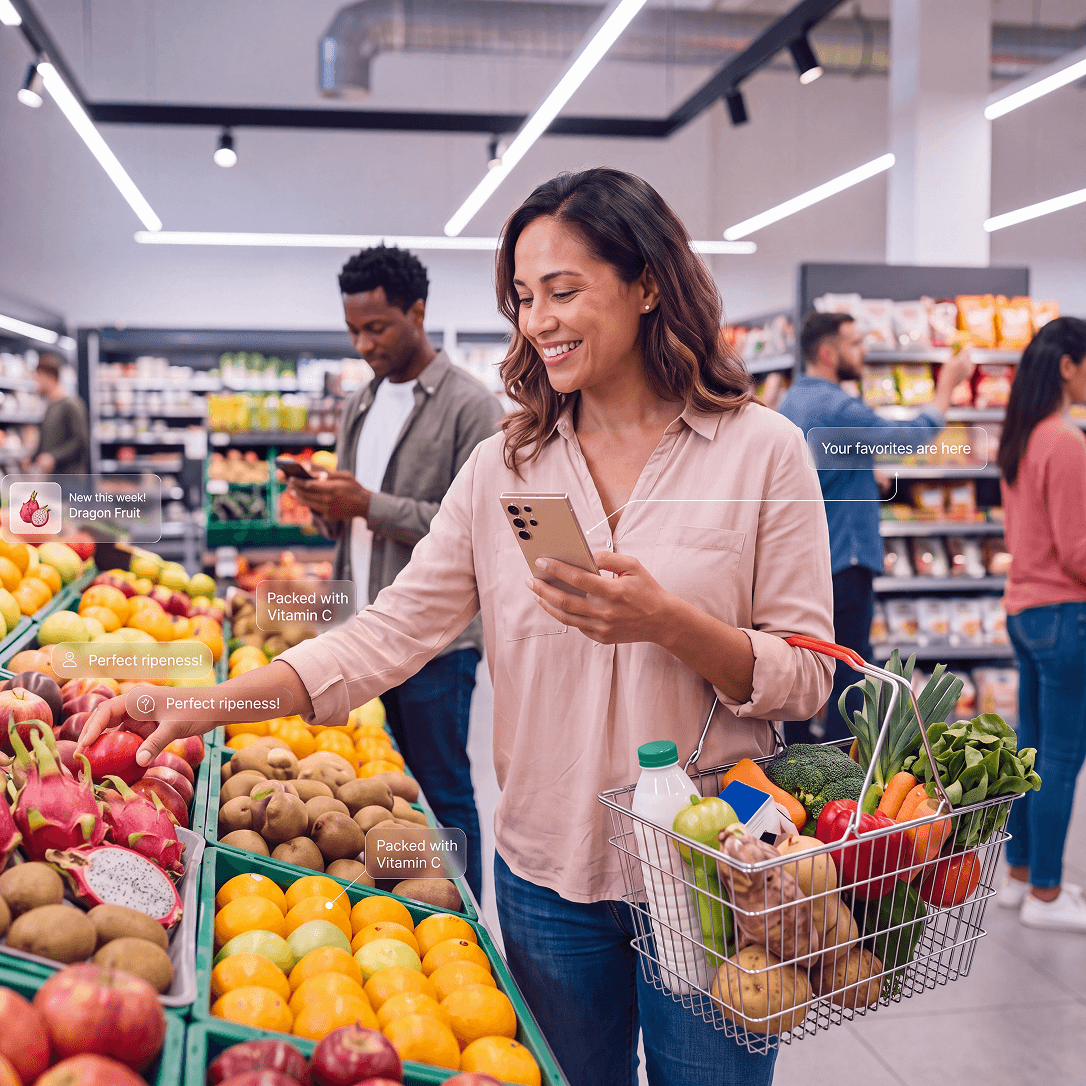



Grocery retailers face mounting pressure to retain customers in an era where shopping choices multiply daily. With online grocery now accounting for a meaningful share of grocery spending—peaking around the high teens in recent months—the competition for customer loyalty has intensified beyond traditional price wars and weekly circulars. Implementing the right grocery eCommerce platform equipped with robust loyalty program software has become essential for grocers who want to transform one-time shoppers into lifetime customers. Modern AI-powered solutions now enable grocers to deploy personalized rewards, track customer behavior across all channels, and build retention strategies that compete head-to-head with big retailers—all without requiring massive IT teams or enterprise budgets.
Loyalty program software provides the technological backbone for creating, managing, and optimizing customer rewards programs across grocery retail operations. Unlike basic punch cards or generic points systems, modern loyalty platforms integrate directly with your existing technology stack to capture customer data, automate reward distribution, and deliver personalized experiences at scale.
At its core, grocery loyalty software enables several critical functions:
The connection between loyalty software and customer retention is direct and measurable. When customers accumulate points, unlock rewards, or receive personalized offers, they develop psychological investment in your store. Research from the Harvard Business Review demonstrates that increasing customer retention rates by just 5% can increase profits by 25% to 95%. Switching to a competitor means abandoning accumulated benefits—a powerful retention mechanism that extends far beyond simple price competition.
For grocers competing against big retailers with vast marketing budgets, loyalty program software levels the playing field. These platforms enable you to build direct customer relationships, collect first-party data, and create differentiated experiences that large chains struggle to replicate at the local level.
Traditional loyalty programs operated on simple rules: spend money, earn points, redeem rewards. AI-powered loyalty transforms this transactional approach into predictive, personalized engagement that anticipates customer needs before they articulate them.
Modern AI-powered solutions analyze shopping patterns to identify which customers are at risk of churning, which products drive repeat visits, and which offers will resonate with specific customer segments. According to McKinsey research, personalization can reduce acquisition costs by up to 50% and increase marketing efficiency by 10-30%. This intelligence enables grocers to:
Consider a customer who typically purchases organic produce every Thursday. An AI-powered loyalty system would recognize the pattern through transaction analysis, send a personalized push notification Wednesday evening highlighting organic produce specials, include bonus points for organic category purchases, track whether the customer responds and adjust future communications accordingly, and flag the customer for intervention if they miss two consecutive Thursday shopping trips.
This proactive approach prevents customer drift rather than reacting to it after the fact. The AI handles pattern recognition and campaign execution, freeing your team to focus on strategic program improvements.
Without proper measurement, loyalty programs become cost centers rather than profit drivers. Establishing clear metrics enables grocers to quantify program ROI and identify optimization opportunities.
Customer Lifetime Value (CLV)
The total revenue a customer generates throughout their relationship with your store. Loyalty programs should demonstrably increase CLV by extending customer relationships and increasing per-visit spending.
Churn Rate
The percentage of customers who stop shopping with you over a given period. Effective loyalty programs reduce churn by creating switching costs and ongoing value.
Purchase Frequency
How often loyalty members shop compared to non-members. This metric directly indicates whether your rewards structure drives repeat visits.
Average Order Value (AOV)
The typical transaction size for loyalty members versus non-members. Tier-based rewards and threshold bonuses should lift AOV measurably.
Redemption Rates
The percentage of earned rewards that customers actually redeem. Low redemption suggests customers don't value the rewards; high redemption indicates engagement but requires cost monitoring.
Implementing omnichannel eCommerce solutions that unify customer data across all touchpoints enables accurate metric calculation. When your POS, eCommerce platform, and mobile app share customer data, you gain complete visibility into shopping behavior regardless of channel.
Your measurement framework should include baseline metrics established before loyalty program launch, weekly tracking of engagement indicators, monthly analysis of financial metrics, and quarterly strategic reviews comparing member versus non-member performance.
Self-ordering kiosk systems provide another valuable data source, capturing customer preferences and purchase patterns during in-store ordering that feed directly into loyalty analytics.
Today's grocery customers expect digital-first experiences that match what they receive from big retailers. A mobile application that integrates loyalty features creates the foundation for modern rewards programs that engage customers wherever they shop.
Digital Coupons and Personalized Offers
Replace paper circulars with targeted digital coupons delivered through mobile apps. Personalization engines analyze purchase history to surface relevant offers, increasing redemption rates and customer satisfaction.
Gamification Elements
Transform routine shopping into engaging experiences through points multiplier challenges, category-based bonus events, streak rewards for consecutive shopping weeks, tier advancement celebrations, and seasonal competitions with special prizes.
Mobile-First Design Principles
Effective grocery mobile apps prioritize loyalty features throughout the shopping experience: visible points balance on home screen and during checkout, one-tap coupon activation that applies automatically, push notifications for expiring rewards and personalized offers, in-app reward redemption without requiring staff intervention, and digital loyalty card that scans at POS.
Push notifications deserve particular attention. When implemented thoughtfully, they maintain top-of-mind awareness and drive timely engagement. Best practice suggests limiting promotional pushes to two or three weekly while ensuring each provides clear value.
Creating a successful loyalty program requires more than purchasing software—it demands strategic design, operational integration, and ongoing optimization.
Points vs. Cash Back vs. Tier-Based
Each structure creates different customer behaviors. Points systems maximize engagement through accumulation psychology, cash back programs offer simplicity and immediate perceived value, and tier-based structures reward highest-value customers with exclusive benefits. Many successful programs combine elements, offering points accumulation with tier unlocks that provide multipliers and exclusive perks.
Redemption Flexibility
Customers value choice in how they use rewards: discount on future purchases, free products after threshold, donation to charitable causes, special event access, and partner rewards.
Successful loyalty programs depend on robust inventory management and POS integration. When systems don't communicate, customers encounter friction: points don't appear at checkout, coupons fail to apply, rewards show as unavailable, and purchase history doesn't sync across channels.
Avoid these failures by ensuring your loyalty software integrates directly with your POS system through real-time data synchronization. Live POS integrations with real-time synchronization that modern platforms offer eliminate manual reconciliation and ensure consistent customer experiences.
Loyalty programs generate maximum value when connected to every customer touchpoint. Isolated loyalty software creates data silos, inconsistent experiences, and operational headaches.
POS System Integration
The most essential connection—loyalty must work seamlessly at checkout with real-time points posting during transactions, automatic coupon application without manual codes, customer lookup by phone number or loyalty card, receipt display of points earned and balance, and reward redemption processing.
eCommerce Platform Integration
Online shoppers expect identical loyalty experiences with login sync between website/app and loyalty account, points earned on all online orders, digital coupon application during checkout, and unified purchase history across channels.
Modern eCommerce platforms build loyalty integration into their core architecture rather than treating it as an add-on.
Marketing Automation Connection
Loyalty data supercharges marketing effectiveness by enabling segmented email campaigns by loyalty tier, automated retention sequences, personalized promotional content based on purchase history, and coordinated offers across channels.
With 90+ marketing integrations available—spanning email/SMS, ads, and customer engagement tools—grocers can activate loyalty data across their entire marketing stack.
Generic rewards programs fade into background noise. Personalized loyalty experiences create emotional connections that transcend transactional relationships.
Dietary Preference Recognition
When your system identifies a customer consistently purchasing gluten-free products, target them with gluten-free product launches, category-specific bonus points, relevant recipe content, and specialized dietary promotions.
Predictive Reorder Prompts
For consumable products with predictable purchase cycles, proactive reminders with attached rewards drive replenishment purchases before customers consider alternatives.
Tier-based loyalty structures enable differentiated experiences for your most valuable customers through entry tier basic benefits, mid-tier enhanced rewards with points multipliers and early sale access, and top tier maximum benefits including personal shopper access and dedicated customer service.
Retail media and CPG integrations create additional tier benefits through partner rewards, exclusive sampling opportunities, and co-branded promotions that extend value beyond your own offerings.
<script src="https://js.hsforms.net/forms/embed/developer/40033180.js" defer></script>
<div class="hs-form-html"
     data-region="na1"
     data-form-id="fe58e6a0-1d5d-4d47-8333-45eee5214d64"
     data-portal-id="40033180"></div>
Local Express provides an AI-powered unified platform purpose-built for food retailers seeking to build customer loyalty without enterprise complexity. Rather than cobbling together disconnected point solutions, Local Express brings everything together in one integrated ecosystem.
Local
Express supports loyalty connectivity—including App Card—enabling grocers to connect existing loyalty programs with eCommerce and in-store systems, unify customer data across all shopping channels, deliver personalized experiences through the Marketing Suite with Native CRM, and activate loyalty data through 90+ marketing integrations.
The platform's AI capabilities enable sophisticated retention strategies. The AI Customer Shopping Agent delivers personalized recommendations based on dietary needs, purchase history, and preferences. AI Dynamic Pricing optimizes promotions while protecting margins. AI Search Agent helps customers find products quickly, reducing friction. Data Analytics & Insights Pro provides real-time dashboards tracking retention metrics.
Local Express connects every customer touchpoint: branded websites with built-in loyalty integration, mobile applications with push notification capabilities, self-ordering kiosks capturing in-store preferences, scan and go for frictionless checkout, and prepared food ordering with Kitchen Management System.
While competitors require months for deployment, Local Express typically launches in 4-8 weeks with 24/7 technical support guiding the transition. The platform scales from single locations to multi-unit operations without requiring massive IT teams. Last-mile delivery management integration ensures loyalty extends through fulfillment, with delivery experience quality influencing overall program perception.
For grocers seeking to compete effectively against big retailers, Local Express provides the unified technology foundation that makes sophisticated loyalty programs achievable and sustainable.
Local Express provides pre-built loyalty connectivity and omnichannel integration that typically launches in 4-8 weeks compared to months-long implementations required by enterprise systems. The platform's API-first architecture enables seamless connection with existing POS systems, eCommerce platforms, and marketing tools without requiring complete technology stack replacement. With 24/7 technical support and unified customer data across all touchpoints, grocers can deploy sophisticated retention programs without massive IT teams or extended timelines.
Local Express includes several AI-powered tools designed specifically for retention: the AI Customer Shopping Agent delivers personalized product recommendations based on dietary preferences and purchase history, AI Dynamic Pricing optimizes loyalty offers while protecting margins, AI Search Agent reduces customer friction during product discovery, and Data Analytics & Insights Pro provides real-time retention metric dashboards. These capabilities enable predictive engagement that anticipates customer needs and prevents churn before it occurs.
Local Express uses API-first architecture to connect with your current technology stack through live POS integrations with real-time synchronization, native eCommerce platform connectivity, 90+ marketing tool integrations spanning email, SMS, ads, and customer engagement platforms, and loyalty platform support including App Card. This approach eliminates data silos while enabling flexible component changes without rebuilding your entire system.
Focus on metrics that directly indicate retention and profitability: Customer Lifetime Value measures total revenue per customer relationship, churn rate tracks what percentage of customers stop shopping with you, purchase frequency compares how often loyalty members shop versus non-members, average order value reveals whether rewards drive larger transactions, and redemption rates show whether customers value and engage with your rewards. Track these metrics monthly while conducting quarterly strategic reviews comparing member performance against non-members to calculate actual program ROI.
Yes, modern loyalty platforms like Local Express are specifically designed for omnichannel integration. Customers should see the same point balance, access the same offers, and earn rewards at identical rates whether purchasing in-store, ordering online for pickup, arranging home delivery, or browsing the mobile app. Local
Express connects every touchpoint—websites, mobile apps, self-ordering kiosks, scan-and-go systems, and delivery platforms—ensuring consistent loyalty experiences that eliminate customer confusion while maximizing program participation across all channels.


