


.png)


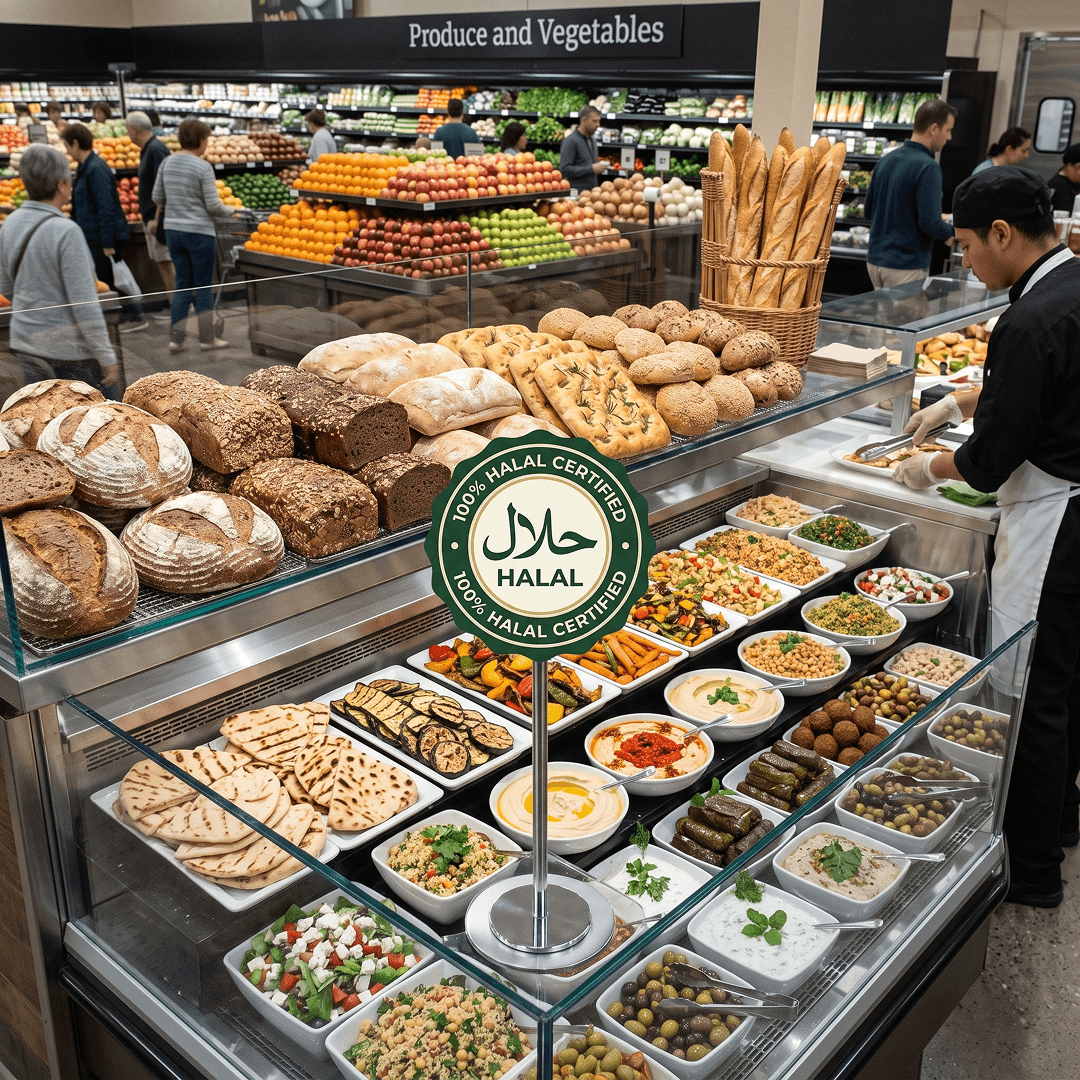



Halal and Middle Eastern grocers sell inventory that generic ecommerce platforms were never built to handle: bulk spices priced by weight, fresh halal meat cuts, prepared mezze counters, and a shopper base that expects certification transparency before checkout. This guide breaks down what an online ordering platform for halal grocery stores has to support in 2026 — and which category of tool does it without giving up the margin.
Independent and regional halal grocers are getting squeezed from two sides: national chains are adding halal and Middle Eastern sections, and delivery marketplaces are sitting between the grocer and the shopper. Every order routed through a third-party app is a customer you don’t own and a margin point you don’t keep.
An ordering platform built for grocery — not reused restaurant delivery software — lets you keep the customer record, control checkout, and take prepared-food orders (kibbeh, shawarma, mezze trays) in the same system as packaged grocery. Shoppers now treat app ordering as the default. If the product page can’t show the cut, the certifying body, and the price per pound, they leave.
Owners running one to twenty stores with halal-certified meat, Middle Eastern imports, or a prepared-food counter, and who still take phone orders, run a basic website, or sell through a third-party delivery app. If repeat shoppers are moving to Amazon Fresh or a national chain’s app because you don’t have your own ordering experience, this is for you.
Halal shoppers decide on certifying body, cut, and source. If that doesn’t sit on the product page as real fields — not a paragraph stuffed into the description — the sale goes to the store that shows it.
Spices, olives, dates, and grains sell by weight. A CPG-style catalog forces fake variants. Those break at checkout and turn into refund arguments.
Mezze counters, hot bars, and MTO items need a different flow from boxed grocery. The clean version is a self-service kiosk that writes into the same order system. For a lot of stores this is already the highest-margin line on the floor
Halal meat and prepared food are perishable. Handing the last mile to a disconnected third party adds temperature risk and late handoffs. Delivery that lives in the same order management system keeps custody in one place.
A real share of this shopper base searches in Arabic, Urdu, or Farsi as well as English. Latin-only search leaves part of the store invisible.
Halal-certified brands will pay for placement. Built-in retail media turns that shelf into a revenue line instead of a cost you can’t bill back.
Commission runs 15% to 30% per order. You don’t get the email, the phone number, or the order history.
Verdict: Skip as the primary channel. Use as a side listing only, if at all.
Fine for a simple catalog. Weight pricing, prepared-food ordering, and grocery routing need custom apps most independents can’t keep maintaining.
Verdict: Consider only if you have a dedicated developer and no near-term plan for kiosk or MTO.
You get exactly what you spec. Every new delivery zone or payment method is another development ticket.
Verdict: Wait unless store volume already pays for a dedicated engineering budget.
Built for regional and independent grocers. Branded site, branded app, self-service kiosks for made-to-order food, order management, and last-mile delivery sit in one stack. A halal or Middle Eastern grocer is not wiring four vendors together to sell a pound of spice and a tray of mezze.
Verdict: Buy if you want an owned ordering channel without a separate system for web, app, kiosk, and delivery.
What is the best online ordering platform for halal grocery stores in 2026?
One built for grocery retail, not restaurant delivery software. It has to do weight-based pricing, certification on the product page, prepared-food ordering, and delivery in one system — not four vendors.
Is a third-party delivery app better than my own ordering platform?
No. DoorDash or Instacart take 15–30% per order and keep the customer data. An owned platform keeps the margin and the relationship.
How much does a halal grocery ordering app cost?
It depends on the vendor and the feature set. Check current pricing with anyone you evaluate. A white-labeled grocery platform is usually less to stand up and less to maintain than a fully custom build.
Do halal grocery shoppers use mobile apps?
Yes. Repeat grocery and prepared-food orders increasingly start in an app. A branded app also lets you push restocks and promotions a website can’t.
Can I add a self-service kiosk to an existing website?
Only if the kiosk writes into the same order backend as the site and the app. A disconnected kiosk creates two inventories and two order books.
Do I need multi-language support?
Yes, if a meaningful share of shoppers search in Arabic, Urdu, or Farsi. English-only search under-serves that group. Multi-script search is a filter, not a nice-to-have.
Marketplace listing vs white-labeled platform?
A marketplace listing puts your products on someone else’s app, under their brand, with commission on every order. A white-labeled platform puts your branded site and app in front of the shopper. You keep the data and the margin.
Yes, if you carry branded halal or Middle Eastern CPG. Suppliers pay for promoted placement. That is revenue, not a sunk merchandising cost.
The grocers picking up shares are not the ones with the longest catalog. They made made-to-order food as easy to buy as a bag of rice. Prepared food carries more margin and brings people back more often than shelf-stable goods. If the ordering platform can’t do both from the first order a weighted spice and a mezze tray, you are building around a hole.
“Every order routed through a third-party delivery app is a customer relationship you don't own and a margin point you don't keep.”


