


.png)





Every grocery retailer leaves money on the table when customers check out without seeing relevant product recommendations. Cross-sell and upsell widgets—strategic digital components that suggest complementary or premium products—can increase sales by 20% or more when properly implemented. Modern grocery eCommerce platforms now leverage AI-powered recommendation engines that analyze customer behavior, purchase patterns, and real-time inventory to surface the right products at the right moment, transforming routine shopping trips into higher-value transactions.
Cross-selling and upselling represent two distinct but complementary strategies that grocery retailers deploy to maximize basket size. Cross-selling suggests complementary products—pasta sauce when a customer adds pasta, chips alongside salsa, or coffee creamer with coffee beans. Upselling encourages customers to choose premium alternatives—organic produce over conventional, family-size packages over standard, or artisanal bread instead of store brands.
The grocery vertical presents unique opportunities for these strategies because shopping behavior follows predictable patterns. Customers purchasing ingredients for a specific meal rarely remember every component. Widget-based recommendations fill these gaps automatically, serving as a digital shopping assistant that anticipates needs.
Why cross-sell and upsell matter for grocery margins:
The psychology behind effective recommendations centers on relevance and timing. Customers respond positively when suggestions feel helpful rather than pushy. Showing marinara sauce options on a pasta product page feels like service; showing unrelated products feels like advertising.
Traditional recommendation systems relied on manual product linking—staff members deciding which items should appear together. This approach fails at scale and misses patterns invisible to human analysis. AI-powered systems transform this process by continuously learning from customer behavior data.
Machine learning algorithms analyze multiple data streams simultaneously:
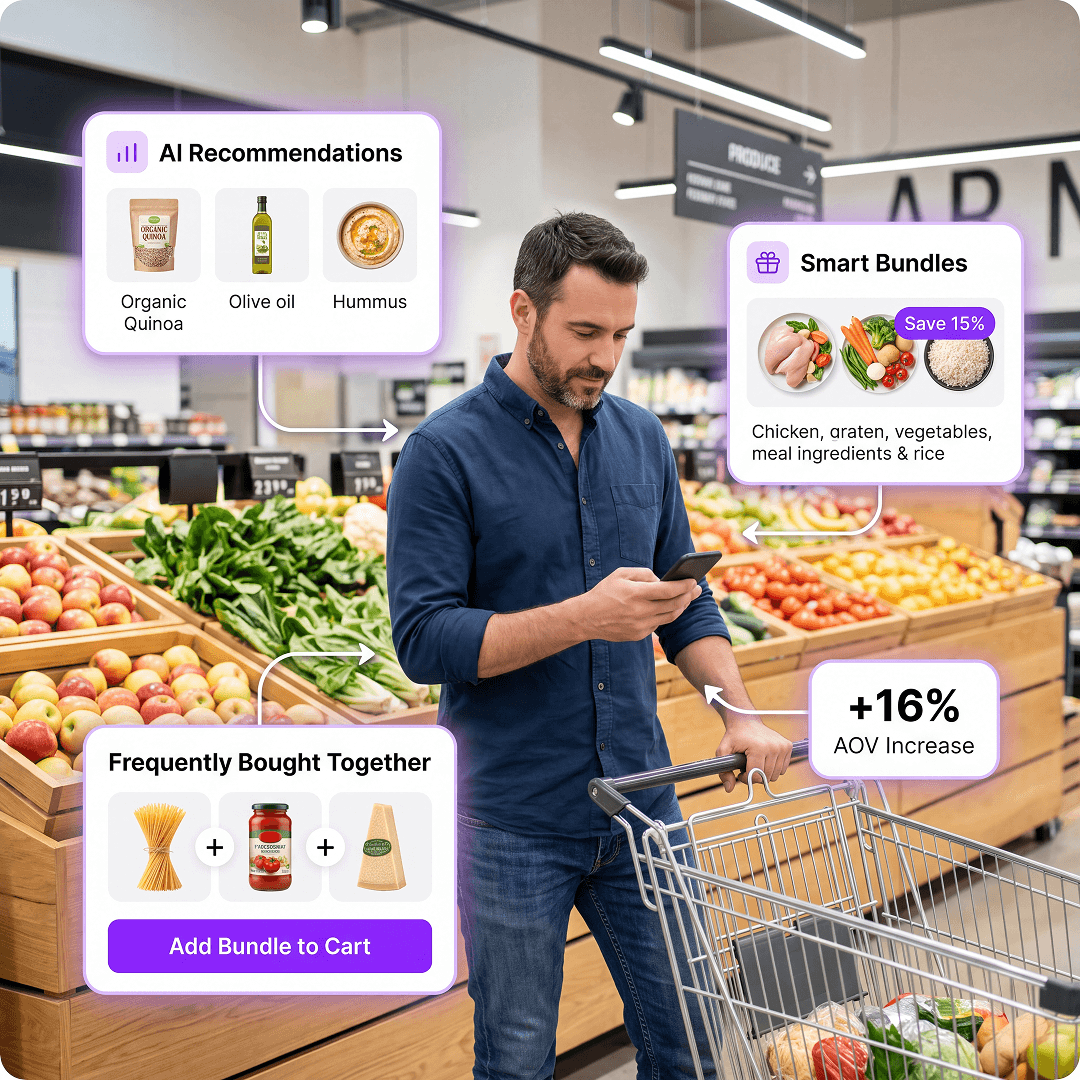
The Trela grocery marketplace implemented AI-powered recommendations through Shaped's platform and achieved a 16% AOV increase. This lift came from dynamic suggestions that adapted to each customer's unique context rather than showing the same static recommendations to everyone.
Effective AI recommendation systems require proper data infrastructure. AI data fusion solutions harmonize information from POS systems, inventory databases, and customer profiles to power accurate suggestions. Without clean, connected data, even sophisticated algorithms produce irrelevant recommendations.
Key implementation considerations include:
Widget design directly impacts conversion rates. Poorly designed recommendations feel intrusive and damage customer experience. Well-designed widgets feel like helpful suggestions from a knowledgeable store associate.
Placement determines whether recommendations interrupt or enhance the shopping flow:
Research indicates that a meaningful percentage of customers add recommended products when widgets appear at optimal placements. This rate increases further when combined with bundle discounts or loyalty incentives.
Bundle offers create urgency and perceived value. Effective bundle strategies include:
While cross-selling adds items, upselling increases the value of items already selected. Grocery retailers have natural upsell opportunities across every department.
Effective upsell triggers for grocery include:
Mobile applications enable personalized upsell messaging through push notifications, alerting customers to premium alternatives or special offers based on their purchase history and preferences.
Loyalty programs amplify upsell effectiveness by providing customer purchase history for personalized recommendations, point incentives for trying premium products, exclusive member pricing on upsell items, and gamification elements encouraging basket expansion.
Integrating loyalty data with recommendation engines allows precise targeting. A customer who consistently buys conventional produce might receive occasional organic upsell offers with bonus loyalty points, gradually shifting behavior.
Grocery customers interact across multiple channels—website, mobile app, and in-store kiosks. Disconnected experiences frustrate customers and waste cross-sell opportunities. Omnichannel eCommerce solutions unify these touchpoints under a single platform.
Each channel presents unique widget opportunities:
Website widgets: Homepage featured bundles based on trending purchases, category page recommendations within browse experience, and cart page cross-sells before checkout.
Mobile app widgets: Push notification upsells triggered by location or time, in-app banners promoting complementary products, and scan-and-go suggestions during self-checkout shopping.
Kiosk widgets: Self-ordering kiosk systems displaying meal add-ons and upgrades, department-specific suggestions, and queue-time upsells during order preparation.
Cross-channel recommendations require unified customer profiles. When a customer adds items via mobile app, their website cart should reflect those items—and recommendations should update accordingly. This synchronization demands real-time data sharing between channels, consistent product taxonomy across platforms, unified customer ID management, and centralized inventory visibility.
Without this infrastructure, customers receive redundant or conflicting recommendations that erode trust.
Implementing widgets without measurement wastes optimization opportunities. Key performance indicators reveal what's working and what needs adjustment.
Track these metrics weekly to optimize widget performance:
Systematic testing improves results over time. Test variables include number of products displayed (3 vs. 5 vs. 7), widget position on page (above fold vs. below product details), headline copy ("Complete Your Meal" vs. "Customers Also Bought"), visual design (carousel vs. grid vs. list format), and discount presentation (percentage off vs. dollar amount vs. no discount).
Professional-tier apps typically include A/B testing capabilities, while free tiers require manual comparison.
Cross-sell opportunities extend beyond the purchase moment. Order management systems and last-mile delivery operations create additional touchpoints.
Post-purchase cross-selling strategies include fulfillment substitutions where AI-powered suggestions recommend appropriate alternatives when items are unavailable, delivery confirmation emails with "You might need these" suggestions for forgotten items, receipt inserts with physical or digital coupons for complementary products, and follow-up campaigns with automated emails suggesting replenishment based on typical consumption cycles.
These touchpoints generate incremental revenue without additional customer acquisition costs.
Widget performance depends on operational infrastructure. Recommending out-of-stock items or showing incorrect prices destroys customer trust and wastes conversion opportunities.
Inventory management solutions with real-time POS synchronization prevent common widget failures through stock-aware recommendations that only suggest products with adequate inventory, location-specific availability for multi-store operations, predictive restocking using AI to anticipate which recommended products need replenishment, and automatic widget adjustment removing out-of-stock items from recommendation pools.
Without this integration, grocers experience significant fulfillment cancellation rates from inventory discrepancies—damaging customer relationships and wasting marketing spend.
POS integration enables real-time pricing accuracy, ensuring promotional prices display correctly in widgets. Integration also provides transaction data feeding AI recommendation models, loyalty point calculations for bundle offers, coupon validation for widget-displayed promotions, and unified reporting across online and in-store channels.
For grocery retailers seeking a comprehensive solution that connects cross-sell and upsell capabilities with robust operational infrastructure, Local Express delivers an AI-native unified commerce platform purpose-built for food retail.
Local Express differentiates from standalone widget apps by providing the complete ecosystem widgets require to perform:
The platform deploys in 4-6 weeks with included implementation support, compared to months of custom development for comparable capabilities. Grocers retain full brand identity and customer data ownership while gaining enterprise-grade recommendation technology.
For big retailers processing thousands of orders monthly across multiple locations, Local Express provides the scalable infrastructure that standalone widget apps cannot match—real-time inventory sync preventing out-of-stock recommendations, predictive AI improving suggestion relevance, and 24/7 support ensuring continuous optimization.
Cross-selling suggests complementary products that pair with items already in the cart—recommending chips when a customer adds salsa, or butter when they add bread. Upselling encourages customers to choose premium versions of products they've selected—organic instead of conventional, family-size instead of standard, or artisanal instead of store-brand. Cross-selling adds items while upselling increases item value.
AI analyzes patterns across thousands of transactions to identify product relationships invisible to manual curation. Machine learning algorithms process purchase history, browsing behavior, cart contents, and seasonal trends to generate personalized suggestions for each customer. The Trela grocery marketplace achieved 16% AOV increases using AI-powered recommendations that optimized for multiple objectives simultaneously.
Effective cross-sell widgets include "Frequently Bought Together" displays showing product bundles with one-click add-to-cart, cart drawer pop-ups suggesting complementary items when products are added, "Complete Your Meal" sections grouping recipe ingredients, threshold progress bars showing how much more is needed for free shipping, and post-purchase upsell pages offering discounts on next-order additions.
Yes, modern omnichannel platforms extend widget functionality to in-store touchpoints. Self-ordering kiosks display add-on suggestions and meal upgrades, mobile apps enable scan-and-go shopping with real-time recommendations, and digital signage can show personalized offers. The key requirement is unified data infrastructure—POS integration, centralized inventory management, and consistent customer profiles across channels.
Track recommendation click-through rates, add-to-cart rates from recommendations, average order value lift comparing customers who interact with widgets versus those who don't, and revenue directly attributed to recommendation clicks. A/B testing different widget configurations, placements, and offers reveals optimization opportunities. Successful programs typically achieve substantial AOV increases within 2-4 weeks of optimization.


