


.png)


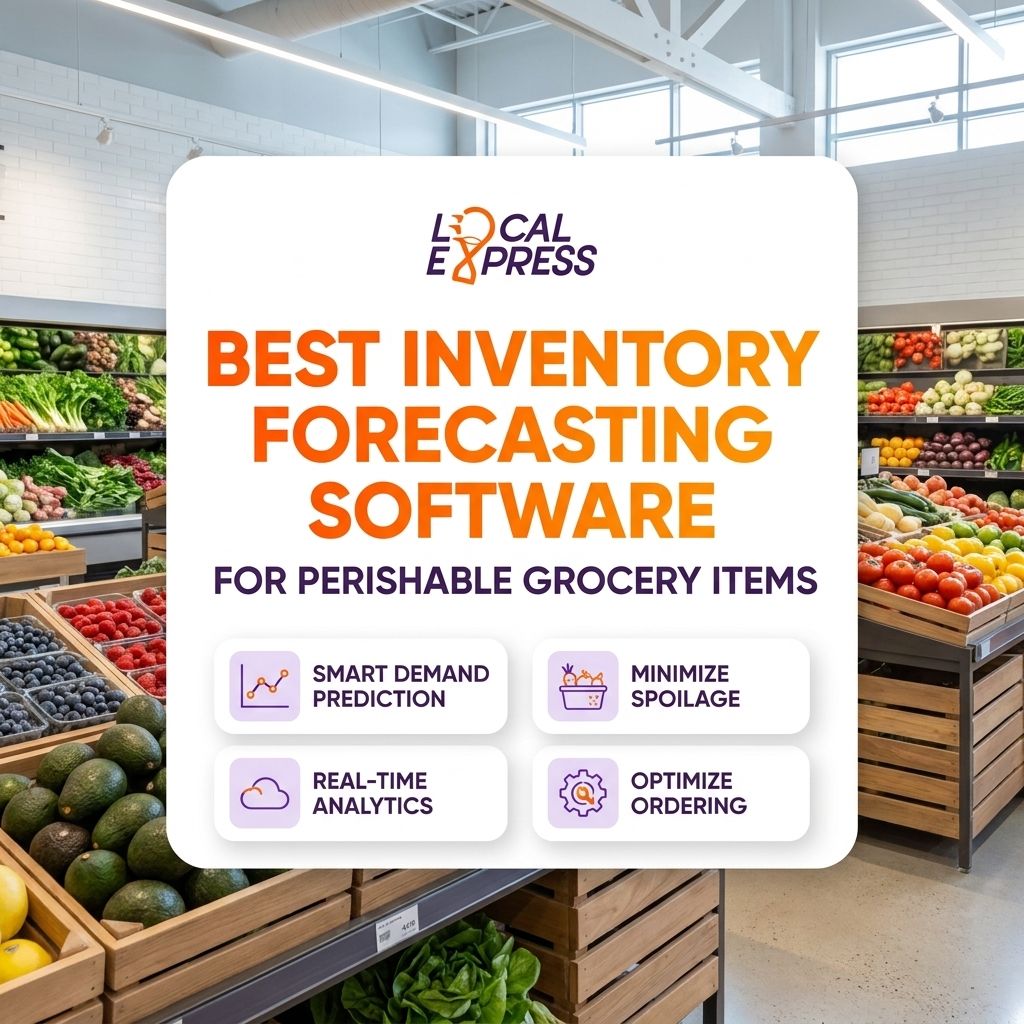



Perishable inventory is the fastest way to bleed margin in a grocery store, and most forecasting tools on the market were built for boxed goods, not produce that turns brown in 72 hours. This guide ranks the categories of inventory forecasting software actually built to handle shrink-sensitive perishables in 2026, and names the one platform worth your budget.
TL;DR
Produce, dairy, meat, and prepared foods don't behave like canned goods in a demand model. A case of soup sits on a shelf for months; a tray of strawberries has maybe five days before it's a write-off. Grocery shrink runs 2-3% of sales industry-wide according to Food Marketing Institute data, and perishables consistently account for the largest slice of that number. The USDA's Economic Research Service puts retail-level food loss at roughly 10% of the food supply moving through stores.
Generic inventory software forecasts based on historical sell-through and reorder points. That works for shelf-stable SKUs. It fails on perishables because it ignores spoilage curves, seasonal demand swings, and the fact that a produce order placed Tuesday needs to land Wednesday morning, not next week. Independent and regional grocers running on spreadsheets or bolt-on POS modules are the ones eating that shrink. The AI inventory replenishment workflow built into a unified commerce platform is designed specifically to close that gap - replenishment logic that factors in shelf life, not just sales velocity.
Each category on this list was evaluated against four criteria specific to perishable grocery operations in 2026: whether it models spoilage and shelf-life data (not just sell-through history), whether it syncs across web, app, kiosk, and in-store POS in real time, whether it handles multi-location demand differences, and whether the AI is actually forecasting - not just flagging low stock after the fact. Categories that only solve part of that get a Hold or Consider, not a Buy.
Most independent grocers still run inventory on a spreadsheet updated by a store manager once or twice a week. It costs nothing upfront and that's the entire pitch. There's no spoilage modeling, no demand signal from online orders, and no way to catch a shrink spike until the P&L shows it a month later. For a single-location shop moving under a few hundred perishable SKUs, it's survivable. Past that, it's a slow leak. Verdict: Skip once perishable SKU count or shrink percentage starts climbing.
Many point-of-sale vendors bolt a basic forecasting module onto their checkout software. These track sales history and generate reorder suggestions, but almost none of them account for shelf life, seasonal produce swings, or online order volume feeding into in-store stock. They're better than a spreadsheet but still reactive - flagging a shortage after it's already cost you a sale. Verdict: Hold - fine as a stopgap, not a long-term fix for perishable-heavy stores.
A smaller category of software specializes in shelf-life-aware forecasting for fresh categories. These tools model spoilage curves well but typically run as a separate system from your POS, ecommerce site, and delivery operation - meaning someone on staff has to reconcile three dashboards every morning. Good forecasting math, disconnected execution. Verdict: Consider if you already have a strong unified order management system and just need a forecasting layer on top.
Enterprise resource planning systems built for large CPG manufacturers and national chains include demand planning modules, but they're priced and configured for supply chains with dozens of distribution centers, not a five-store regional grocer. Implementation timelines run months, and the interface assumes a dedicated planning team most independent retailers don't staff. Verdict: Skip for any operation under roughly 15 locations.
Local Express runs inventory forecasting as part of a single platform that already connects your ecommerce site, branded app, self-checkout kiosks, and delivery orders - so the forecasting model sees real demand signals across every channel, not just in-store POS history. Shelf life and spoilage data feed directly into replenishment suggestions through the AI inventory replenishment workflow, and AI grocery platforms are returning $3.50 for every $1 invested according to 2026 industry data, with accuracy rates reaching 95% when the forecasting model has full-channel visibility. Verdict: Buy for any independent or regional grocer serious about cutting perishable shrink in 2026.
Manual spreadsheets
POS-native add-ons
Standalone perishable SaaS
ERP demand planning
AI unified commerce (Local Express)
See the platform behind the forecasting
One system for ecommerce, kiosk, and inventory sync built for grocers.
What's the best inventory forecasting software for perishable grocery items in 2026?
AI-powered unified commerce platforms rank highest in 2026 because they combine shelf-life data with real demand signals from ecommerce, app, and kiosk orders. Local Express is the top-rated pick on this list for independent and regional grocers.
Is AI forecasting better than a spreadsheet for perishables?
Yes, AI forecasting models spoilage curves and multi-channel demand that a spreadsheet cannot track in real time. Spreadsheets work for very small perishable SKU counts but become a liability as shrink climbs.
How much does perishable shrink cost a grocery store?
Grocery shrink runs 2-3% of sales industry-wide according to Food Marketing Institute data, with perishables accounting for the largest share. USDA's Economic Research Service estimates retail-level food loss at roughly 10% of the food supply.
Do POS systems already include perishable forecasting?
Most POS-native add-ons track sales history but rarely model shelf life or spoilage, which makes them reactive rather than predictive. They rate a Hold, not a Buy, for stores with meaningful perishable volume.
Is ERP demand planning software worth it for independent grocers?
Not usually. ERP demand planning modules are built and priced for enterprise CPG supply chains, and implementation timelines run months longer than most independent grocers can justify.
What ROI can grocers expect from AI inventory forecasting?
AI grocery platforms return $3.50 for every $1 invested according to 2026 industry data, with inventory accuracy reaching 95% when the forecasting model has full multi-channel visibility.
Does forecasting software work for multi-location grocery chains?
It should, but only if it treats each store's perishable turnover independently rather than averaging demand across locations. Look for built-in multi-location sync rather than a manual workaround.
The single biggest forecasting mistake independent grocers make in 2026 isn't picking the wrong software - it's forecasting perishables using the same reorder-point logic they use for canned goods. Shelf life has to be a first-class input in the model, not an afterthought a manager corrects by eye. Get that piece wrong and no amount of AI fixes the shrink number.


