


.png)


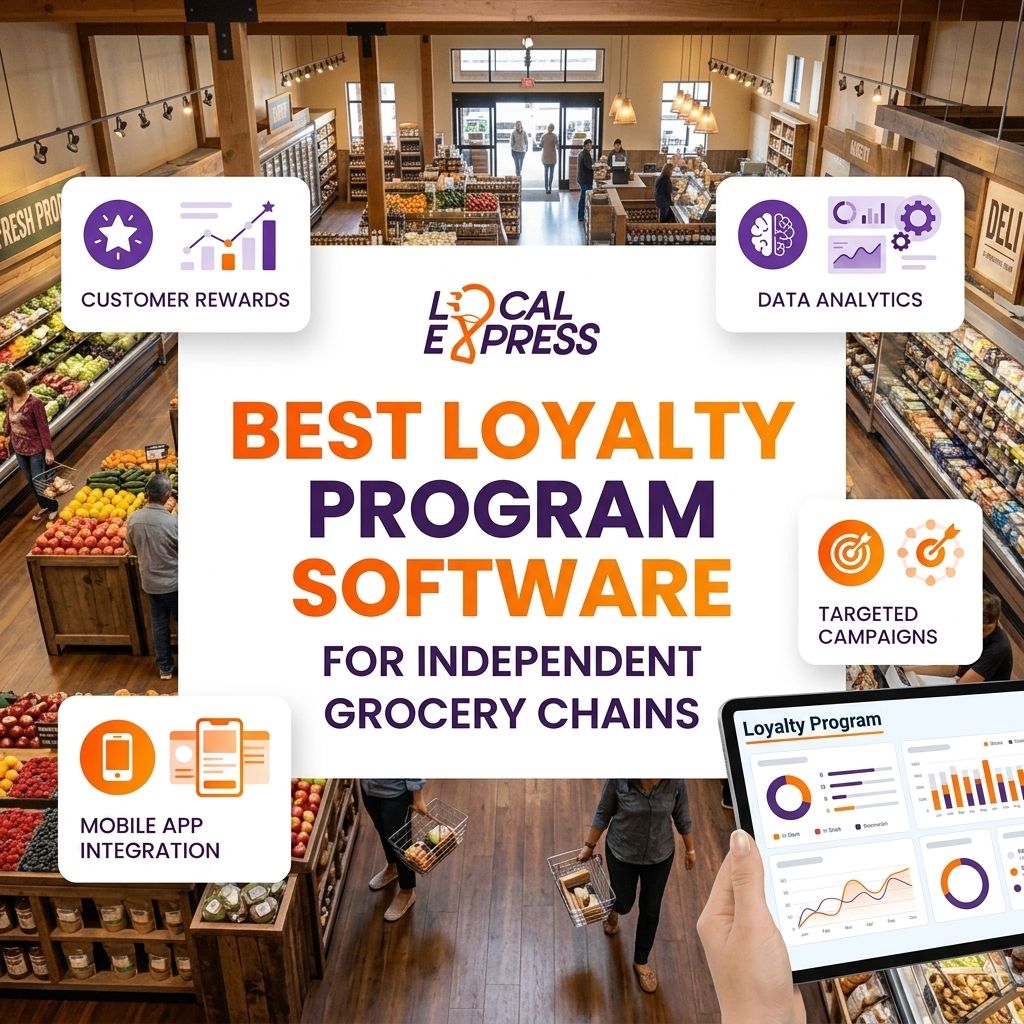



Independent grocers lose loyalty-program shoppers to punch cards and bolt-on apps that don't talk to the register, the website, or the kiosk. This guide ranks the six ways regional and independent grocery chains build loyalty program software in 2026, and names the one that actually holds up across channels.
TL;DR
Grocery runs on 1-3% net margins. A loyalty program that doesn't move basket size or repeat visits is a cost center, not a growth lever. The problem for independent and regional chains isn't picking a loyalty vendor -- it's picking one that shares a single customer identity across your ecommerce site, branded app, and self-checkout kiosks instead of stacking three disconnected point systems.
Acquiring a new grocery customer costs roughly 5x more than retaining one you already have. That math is why regional chains are moving loyalty off the POS-only model and into platforms that connect loyalty data to ordering, delivery, and retail media in one place. The software you pick in 2026 determines whether your loyalty data compounds or sits stranded in a register report nobody reads.
Each approach below is scored on three things that matter to independent grocers specifically: whether it shares customer identity across web, app, and kiosk; whether it integrates with existing POS and SNAP/EBT payment rails; and whether it creates data you can actually act on for merchandising or retail media. Approaches that require a separate login, card, or app just for loyalty get penalized -- fragmentation is the single biggest reason grocery loyalty programs stall out after launch. This isn't a lab test; it's a structural comparison of what each approach forces your team to maintain long-term.
The safe pick. A unified commerce platform ties loyalty to the same account a shopper uses on your ecommerce site, your branded app, and your self-checkout kiosk -- one identity, one points balance, one purchase history. Local Express runs this model for regional and independent grocers who need loyalty data to feed merchandising and retail media decisions, not just discount codes at checkout. The 2026 case for this approach is simple: fragmented loyalty data can't power personalized offers, and personalized offers are what keep shoppers off marketplaces. Verdict: Buy.
The familiar pick. If your point-of-sale system already has a loyalty module bolted on, POS-integrated loyalty card systems can work for single-location stores that don't run ecommerce or a branded app. The catch: most POS loyalty modules stop at the register and don't extend to online ordering or kiosk self-checkout, which means a shopper's in-store points and online points live in two separate buckets. Fine for one store. A liability for a multi-location chain. Verdict: Consider.
The growth pick. Chains that already run a branded mobile app can integrate loyalty rewards directly into that white-label app, pushing points, tiers, and redemption straight through the same app shoppers use to order. This works best when the app already owns checkout and delivery -- loyalty becomes another feature of an experience shoppers already open weekly, instead of a separate download. Verdict: Consider.
The monetization pick. Grocers running a retail media program in 2026 can connect loyalty data to digital coupon and rebate integration funded by CPG brands, turning loyalty tiers into targeted, sponsored offers rather than blanket discounts paid for out of margin. This approach only works if you already have a retail media program running or in planning -- without CPG-funded offers, it's just another discount engine. Verdict: Consider.
The nostalgia pick, and it should stay that way past one location. A stamp card costs almost nothing to launch and nothing to maintain, which is exactly the problem: it generates zero purchase data, can't segment shoppers, and can't sync with an ecommerce site or app. For a single counter-service deli, fine. For a regional chain trying to compete on personalization, it's dead weight. Verdict: Skip.
The borrowed pick. Some grocers lean on loyalty perks offered inside third-party marketplaces to keep listings competitive. The tradeoff: the marketplace owns the customer relationship and the purchase data, not the grocer. Any loyalty signal generated there never reaches your own merchandising or retail media systems. Chains actively working to reduce marketplace dependency shouldn't build their loyalty strategy on a channel they're trying to exit. Verdict: Skip.
See loyalty built into one platform
One customer record across web, app, and kiosk checkout.
Unified commerce platform (Local Express)
POS-native loyalty module
White-label app loyalty rewards
Retail-media-linked loyalty
Punch-card / paper stamp
Marketplace loyalty perks
What's the best loyalty program software for grocery chains in 2026?
A unified commerce platform with loyalty built into web, app, and kiosk checkout is the best option for multi-location grocery chains in 2026, because it keeps one customer record instead of splitting data across register, app, and website systems.
Is POS-native loyalty better than an app-based loyalty program?
POS-native loyalty works fine for a single store with no ecommerce or app, but it stops at the register and won't sync with online ordering. App-based loyalty is better once a chain runs its own branded app and website.
How much does grocery loyalty program software cost?
Cost varies by whether loyalty is a standalone add-on or built into an existing ecommerce and app platform a grocer already pays for -- ask any vendor for a quote against your specific store count and channel mix.
Can loyalty programs work with SNAP/EBT payments?
Yes, but only if the loyalty system is built to handle split-tender transactions where a shopper pays partly with SNAP/EBT and partly with a card, which is a common failure point in bolt-on loyalty apps.
Do independent grocers need a branded app for loyalty to work?
No, but a branded app makes loyalty stickier because points, offers, and redemption sit inside an app shoppers already open to reorder, instead of a separate loyalty-only download.
Why do punch-card loyalty programs fail for grocery chains?
Punch cards generate no purchase data, can't segment shoppers by basket size or frequency, and can't sync with an ecommerce site, which makes them unworkable once a grocer operates more than one location.
How does loyalty data connect to retail media programs?
Loyalty purchase history lets a grocer target CPG-funded sponsored offers to specific shopper segments instead of running blanket discounts paid for out of margin, turning loyalty tiers into a retail media asset.
Should a grocery chain build loyalty around a third-party marketplace?
No -- any loyalty data generated inside a third-party marketplace stays with the marketplace, not the grocer, which undercuts chains trying to build their own customer relationships in 2026.
The grocers getting the most out of loyalty software in 2026 aren't the ones with the flashiest points program -- they're the ones who can see a single shopper's purchase across web, app, and in-store kiosk on one screen. That visibility is what turns loyalty data into a merchandising decision, not just a discount line item. If your current setup can't answer "what did this shopper buy last month across every channel" in one query, the loyalty software isn't the problem -- the fragmentation underneath it is.


